
Everything Homeowners Need to Know About Aluminum Pool Enclosures
By Gian Nicolo, Owner
Most homeowners spend a lot of time thinking about the screen in a pool enclosure.
Few spend much time thinking about the aluminum.
That’s understandable.
The screen is what you see through.
The screen keeps bugs out.
The screen gets torn during storms.
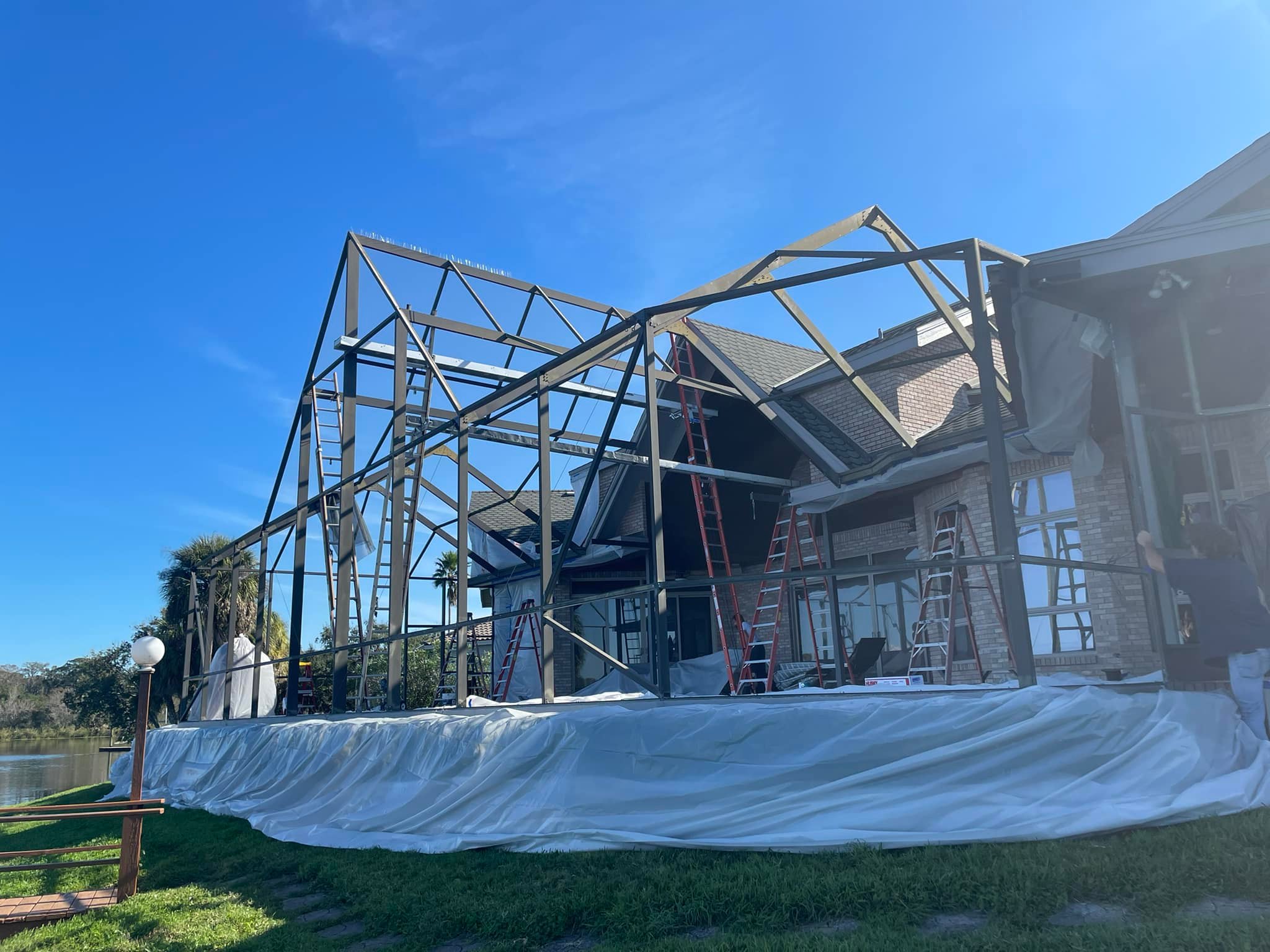
But the aluminum frame is actually the most important part of the entire structure.
Without it, the enclosure wouldn’t exist.
Every screen panel, roof section, door, and support system depends on the aluminum framework.
Understanding how aluminum pool enclosures are built, why aluminum is used, and what causes aluminum structures to age can help homeowners make better decisions about maintenance, restoration, repairs, and future upgrades.
Why Aluminum Is Used Instead of Steel
Many homeowners assume steel would be stronger.
While steel certainly has advantages in some applications, aluminum offers several benefits that make it ideal for pool enclosures.
Aluminum is:
- Lightweight
- Strong
- Corrosion resistant
- Easy to fabricate
- Easier to install
- Long-lasting
Most importantly, aluminum performs exceptionally well in Florida’s environment compared to many alternative materials.
The Pool Cage Is Actually an Engineered Structure
One of the biggest misconceptions homeowners have is thinking a pool cage is simply a collection of aluminum pieces connected together.
It’s not.
A properly designed enclosure is engineered to withstand:
- Wind loads
- Gravity loads
- Rain loads
- Structural movement
- Thermal expansion
Every member serves a purpose.
Every connection matters.
Every screw contributes to the performance of the overall system.
That’s why professional inspections focus on the entire system rather than individual components.
Not All Aluminum Ages the Same Way
Homeowners are often surprised to learn that two enclosures built the same year can age very differently.
Several factors affect longevity.
These include:
- Coastal exposure
- Sun exposure
- Maintenance history
- Storm exposure
- Fastener condition
This is why one enclosure may still look fantastic after twenty years while another requires restoration much sooner.
Understanding Aluminum Oxidation
One of the most common signs of aging is oxidation.
Many homeowners first notice:
- White chalky residue
- Fading
- Dull appearance
- Surface discoloration
Unlike steel, aluminum doesn’t rust in the traditional sense.
Instead, it develops an oxidized surface layer.
Initially, that layer actually helps protect the metal underneath.
Over time, however, oxidation affects appearance and often signals that restoration should be considered.
Why Pool Cages Fade
Florida sunlight is relentless.
Year after year, ultraviolet radiation attacks the finish protecting the aluminum.
Eventually homeowners notice:
- Color fading
- Chalking
- Oxidation
- Surface deterioration
This is particularly common on older bronze and white enclosures.
The good news is that fading doesn’t automatically mean the enclosure is structurally compromised.
In many cases, restoration is an excellent option.
The Role of Fasteners
The aluminum frame gets most of the attention.
The fasteners often deserve just as much.
A pool enclosure may contain hundreds or even thousands of screws.
These fasteners connect:
- Beams
- Columns
- Roof members
- Structural joints
When fasteners begin deteriorating, the enclosure’s performance can be affected.
This is one reason screw replacement is frequently part of restoration projects.
Why Hurricane Tie-Down Systems Matter
Many homeowners don’t realize their enclosure may contain tie-down systems designed to provide additional support during severe weather.
These systems often include:
- Steel cables
- Anchor points
- Fasteners
- Concrete attachments
Over time these components should be inspected for:
- Fraying
- Corrosion
- Rust
- Damage
A well-maintained tie-down system plays an important role during storm season.
Common Problems Homeowners Experience
As aluminum enclosures age, homeowners frequently encounter:
Oxidation
The white chalky residue many people notice on older cages.
Rust Stains
Often associated with aging fasteners.
Fading
Particularly common on older finishes.
Structural Movement
Usually associated with connection issues or aging hardware.
Screen Deterioration
Often occurring independently of the aluminum structure itself.
Many of these issues can be addressed before major repairs become necessary.
How Long Should an Aluminum Pool Enclosure Last?
This is one of the most common questions homeowners ask.
The answer depends on:
- Maintenance
- Environment
- Storm history
- Fastener condition
- Restoration history
Many aluminum structures remain functional for decades.
The key is identifying issues early and maintaining the enclosure properly.
Restoration vs Replacement
Many homeowners assume a faded enclosure automatically requires replacement.
Not necessarily.
If the structure remains sound, restoration may include:
- Screw replacement
- Oxidation treatment
- Rescreening
- Surface preparation
- New protective coatings
The transformation can be dramatic.
In many situations, restoration provides years of additional life at a fraction of replacement cost.
Why Aluminum Continues Dominating the Industry
Despite advances in building materials, aluminum remains the standard for pool enclosures throughout Florida.
The reasons are simple:
- Strength
- Longevity
- Corrosion resistance
- Cost efficiency
- Design flexibility
For most applications, aluminum continues to provide the best overall combination of performance and value.
The Bottom Line
Most homeowners focus on the screen.
The aluminum frame is actually the heart of the enclosure.
Understanding how aluminum structures function, how they age, and what maintenance they require helps homeowners make smarter decisions and protect their investment.
A properly maintained aluminum pool enclosure can provide decades of service while dramatically improving the comfort, appearance, and functionality of an outdoor living space.
Frequently Asked Questions
Does aluminum rust?
Not like steel. Aluminum typically develops oxidation rather than traditional rust.
How long do aluminum pool enclosures last?
Many last decades when properly maintained and restored as needed.
Can oxidized aluminum be restored?
Yes. Restoration often includes oxidation treatment and protective coatings.
Does a faded enclosure need replacement?
Not always. Many faded enclosures are excellent candidates for restoration.
Thinking About Improving Your Outdoor Living Space?
Whether you’re considering a new pool enclosure, screen room, restoration project, rescreening, or enclosure upgrade, Screening DunRite can help you understand your options and protect your investment.
Call or Text 727-645-9575 for a free consultation and estimate.
Need Pool Cage Restoration in Hudson? Call 727-645-9575 or book a free estimate online .