
Is Pet Screen Worth It? What Every Florida Pet Owner Should Know Before Rescreening Their Pool Enclosure
By Gian Nicolo, Owner
If you own a dog, chances are you’ve experienced one of the most common pool enclosure problems in Florida.
A torn screen.
Maybe your dog got excited when the neighbor walked by.
Maybe a squirrel ran across the fence.
Maybe your puppy simply wanted to investigate something outside the enclosure.
Whatever the reason, the result is usually the same.
A damaged screen panel.
And often, it happens again.
And again.
Many homeowners eventually reach a point where they ask:
“Is there a better option than standard screen?”
The answer is yes.
It’s called pet screen.
And for many Florida homeowners, it’s one of the smartest upgrades they can make.
What Is Pet Screen?
Pet screen is a heavy-duty screen material specifically designed to resist damage caused by pets.
Unlike standard fiberglass screen, pet screen is significantly stronger and more durable.
The material is designed to withstand:
- Scratching
- Pawing
- Jumping
- Claw contact
- Daily wear and tear
That doesn’t mean it’s indestructible.
But it is dramatically tougher than traditional screening.
Why Standard Screen and Pets Don’t Always Mix
Standard fiberglass screen performs very well for most applications.
It’s affordable.
It provides excellent visibility.
It allows great airflow.
The problem is that it was never designed to handle the behavior of energetic pets.
Dogs commonly:
- Jump on screens
- Scratch screens
- Push against screens
- Lean on screens
Over time, standard screen often loses that battle.
The Most Common Dog Damage We See
Some breeds are more enthusiastic than others.
Common causes of screen damage include:
Squirrel Patrol
Dogs launching themselves toward the enclosure because they spotted something outside.
Fence Line Patrol
Running back and forth along enclosure walls.
Visitor Excitement
Jumping when guests arrive.
Separation Anxiety
Scratching at doors and screen panels.
Many homeowners become tired of repeatedly repairing the same sections.
Why Pet Screen Is Usually Installed Low
Most homeowners don’t install pet screen throughout the entire enclosure.
Instead, they typically install it:
- Below chair rails
- Around doors
- In high-traffic areas
- Wherever pets spend the most time
This approach often provides excellent protection while controlling costs.
Pet Screen Is Also Great for Children
Interestingly, pet screen isn’t just for pets.
Families with young children often appreciate the additional durability.
Kids sometimes:
- Push on screens
- Kick balls into screens
- Play near enclosure walls
Pet screen helps provide extra protection in these situations.
The Visibility Difference
One question homeowners frequently ask is:
“Will it look different?”
The answer is yes, slightly.
Pet screen is heavier than standard screen.
However, most homeowners quickly adapt and prefer the peace of mind that comes with increased durability.
The Cost of Repeated Repairs
Let’s compare two scenarios.
Scenario One
Standard screen.
Three torn panels per year.
Repeated service calls.
Repeated repairs.
Scenario Two
Pet screen in high-risk areas.
Fewer repairs.
Less frustration.
For many pet owners, the math becomes obvious.
The upgrade often pays for itself over time.
Which Pets Benefit Most?
Pet screen is especially popular among owners of:
- Labrador Retrievers
- German Shepherds
- Golden Retrievers
- Huskies
- Boxers
- Pit Bulls
- Large mixed breeds
However, even smaller dogs can create screen damage over time.
Pet Screen Around Pools
Pool areas naturally attract activity.
Dogs often become excited around:
- Swimmers
- Toys
- Visitors
- Wildlife
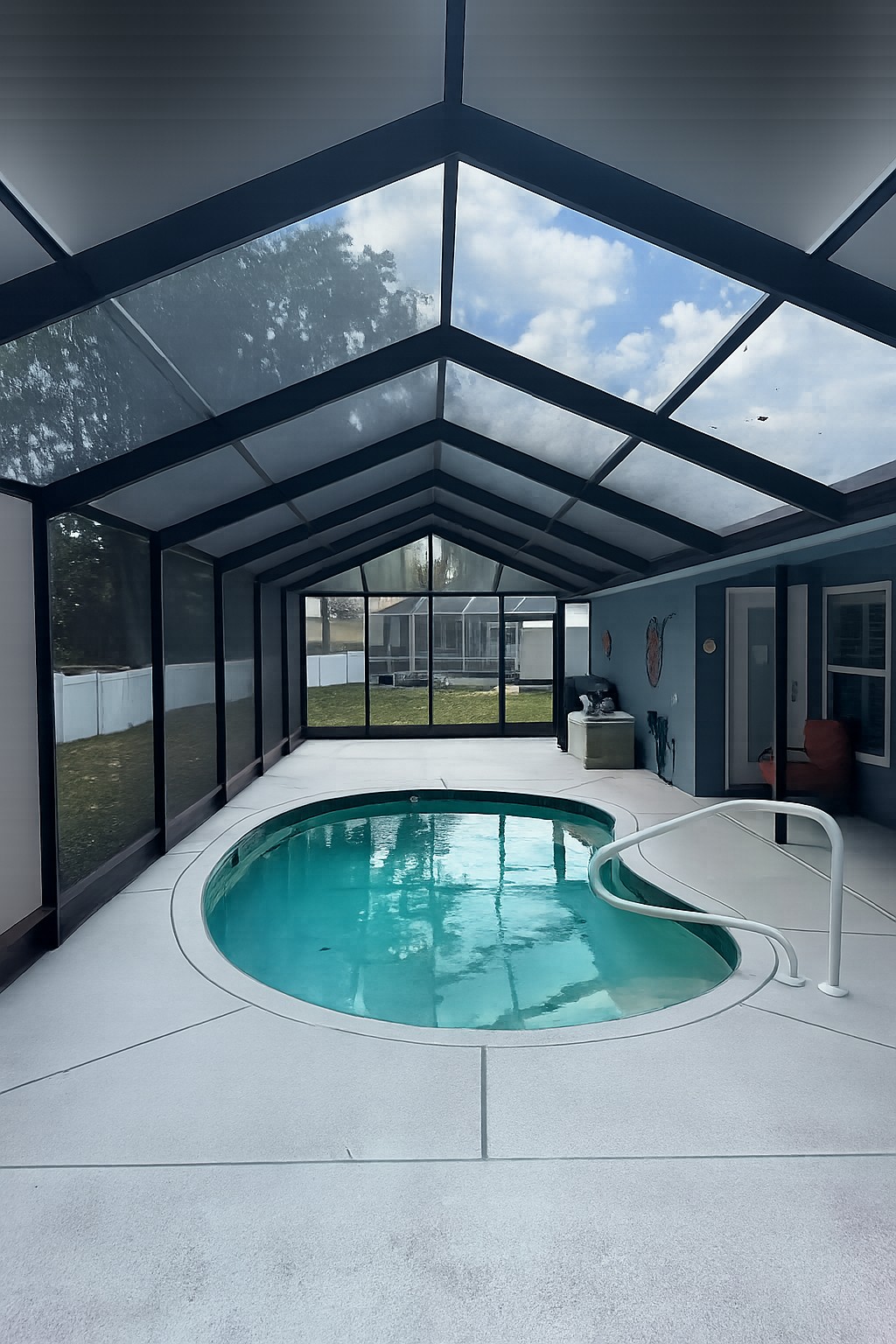
This makes pool enclosures one of the most common locations for pet-related screen damage.
Installing pet screen strategically around the pool area can significantly reduce maintenance.
The Bottom Line
If your dog has damaged a screen once, there’s a good chance it may happen again.
Pet screen provides a stronger, more durable alternative to standard fiberglass screen and helps protect some of the most vulnerable areas of a pool enclosure.
For many Florida homeowners, it becomes one of the most practical upgrades available.
Less repairing.
Less frustration.
More time enjoying the backyard.
And less time worrying every time the dog spots a squirrel.
Frequently Asked Questions
Is pet screen stronger than standard screen?
Yes. Pet screen is significantly more durable than traditional fiberglass screen.
Can dogs still damage pet screen?
Anything can be damaged under the right conditions, but pet screen is much more resistant to scratching and impact.
Should I install pet screen everywhere?
Many homeowners only install it in high-risk areas to maximize value.
Is pet screen worth the upgrade?
For pet owners who repeatedly repair torn screens, absolutely.
Tired of Replacing Torn Screens?
If your dog keeps damaging enclosure screens, Screening DunRite can help you determine whether pet screen is the right solution for your home.
We specialize in pool cage rescreening, pet screen installation, Florida Glass upgrades, restoration, repairs, roof cleaning, and gutter cleaning throughout Port Richey, New Port Richey, Trinity, Palm Harbor, Clearwater, Odessa, Wesley Chapel, Spring Hill, Tampa, and surrounding communities.
Call or Text 727-645-9575 for a free estimate and professional enclosure evaluation.
Need Pool Cage Rescreening in Tarpon Springs? Call 727-645-9575 or book a free estimate online .