
Why Your Pool Cage Door Is Telling You Something Important About Your Enclosure
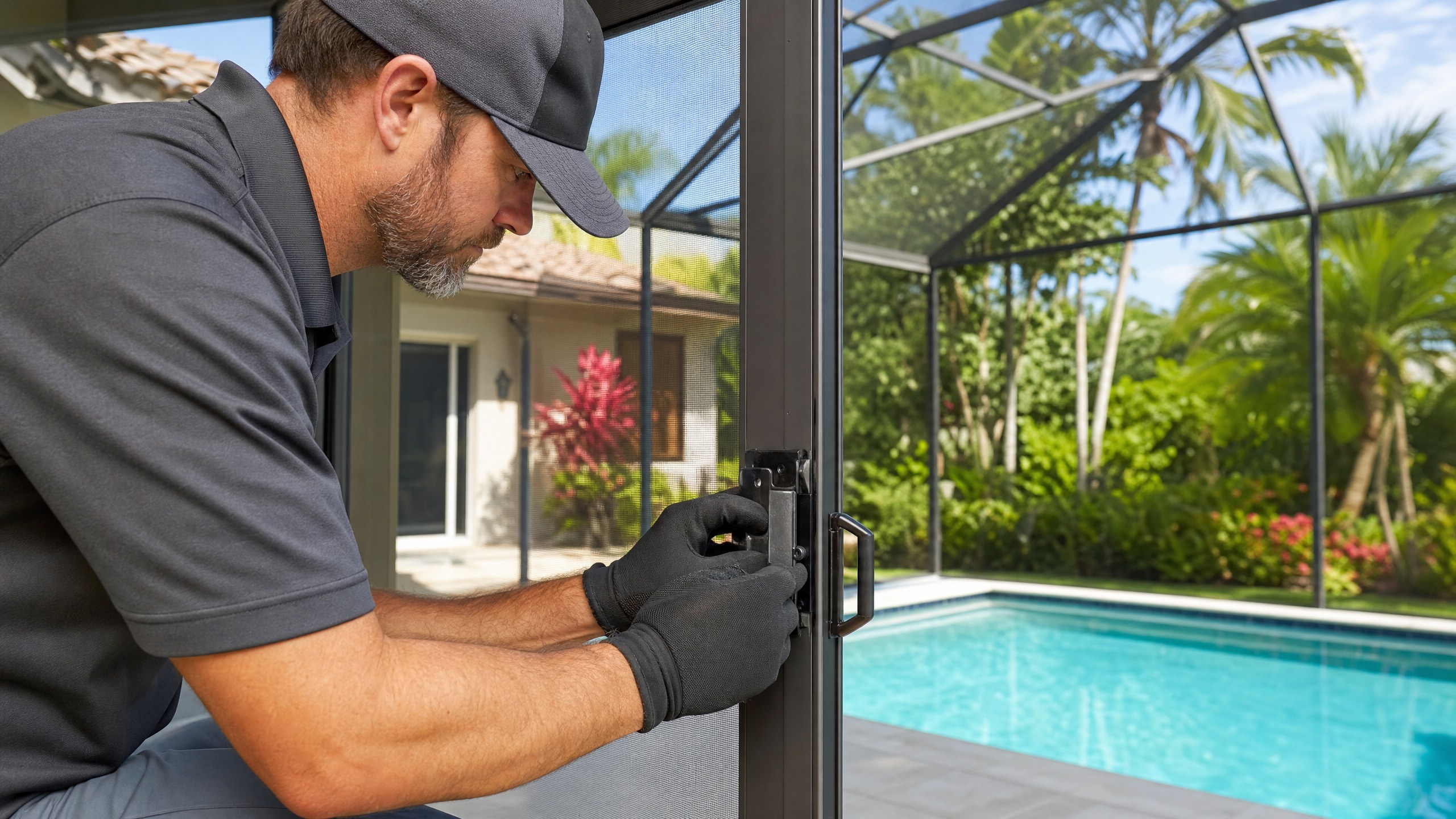
By Gian Nicolo, Owner
One of the most common service calls we receive starts with a surprisingly simple complaint:
“My pool cage door won’t close.”
Or:
“The door is dragging.”
Or:
“It used to latch fine, but now it doesn’t.”
Most homeowners assume they have a door problem.
Sometimes they do.
But after inspecting pool enclosures throughout Florida, I’ve learned something important:
Pool cage doors often act like warning lights on a car dashboard.
The problem isn’t always the door.
The door is often reporting a problem somewhere else.
The Most Sensitive Part of the Entire Enclosure
Unlike screens, which remain relatively passive, doors move constantly.
They open, close, align, and latch.
Because doors rely on precise alignment, even small changes within the enclosure can affect their performance.
That’s why experienced inspectors pay close attention to doors.
Why Pool Cage Doors Suddenly Stop Working Correctly
“It worked perfectly last year. What changed?”
The answer is usually one of four things:
Structural Movement
Fastener Deterioration
Settlement
Previous Storm Stress
The door didn’t necessarily change.
The enclosure around it did.
See pool cage door repair guide and why pool enclosure doors sag, stick, and stop closing.
What a Dragging Door May Be Telling You
A dragging door often indicates movement — not dramatic movement, just enough to affect alignment.
Possible causes include connection changes, structural stress, fastener issues, and minor settling.
Many homeowners adjust the door and move on.
If the underlying cause isn’t addressed, the problem often returns.
The Importance of Door Gaps
Uniform gaps often indicate healthy alignment.
Uneven gaps may indicate movement, structural stress, previous damage, or connection issues.
Why Hurricane Damage Often Appears at the Door First
After major storms, the door may be revealing hidden stress elsewhere in the enclosure.
A storm doesn’t always create immediate structural failure.
Sometimes it simply alters how loads distribute through the structure.
The Fastener Connection
When fasteners deteriorate, connection performance changes.
When movement occurs, doors often notice before homeowners do.
See the pool cage screw crisis.
What We Look for During a Door Inspection
When evaluating a pool cage door, we evaluate alignment, fastener condition, structural movement, frame condition, connection integrity, and adjacent components.
The objective is determining whether the door is the problem — or the messenger.
The Most Common Mistake Homeowners Make
Treating symptoms without investigating causes.
Replacing hardware, adjusting hinges, or forcing alignment may temporarily improve performance.
If structural conditions have changed, the issue often returns.
The Question Every Homeowner Should Ask
Instead of asking “What’s wrong with my door?” ask:
“What is my door trying to tell me?”
Final Thoughts
A sticking door doesn’t automatically indicate a structural problem.
But it does deserve attention.
The best inspections don’t just identify what’s broken.
They identify why it happened.
Call 727-645-9575 or book online.
Need Pool Cage Repair in Wesley Chapel? Call 727-645-9575 or book a free estimate online .