
The Pool Cage Repair Nobody Sees Coming: Why Fastener Failure Is One of Florida's Most Expensive Hidden Problems
By Gian Nicolo, Owner
When homeowners think about pool enclosure repairs, they usually think about torn screens.
That’s understandable.
A ripped screen is obvious.
You can see it immediately.
The same can’t be said for one of the most common and potentially expensive problems affecting Florida pool enclosures.
Fastener failure.
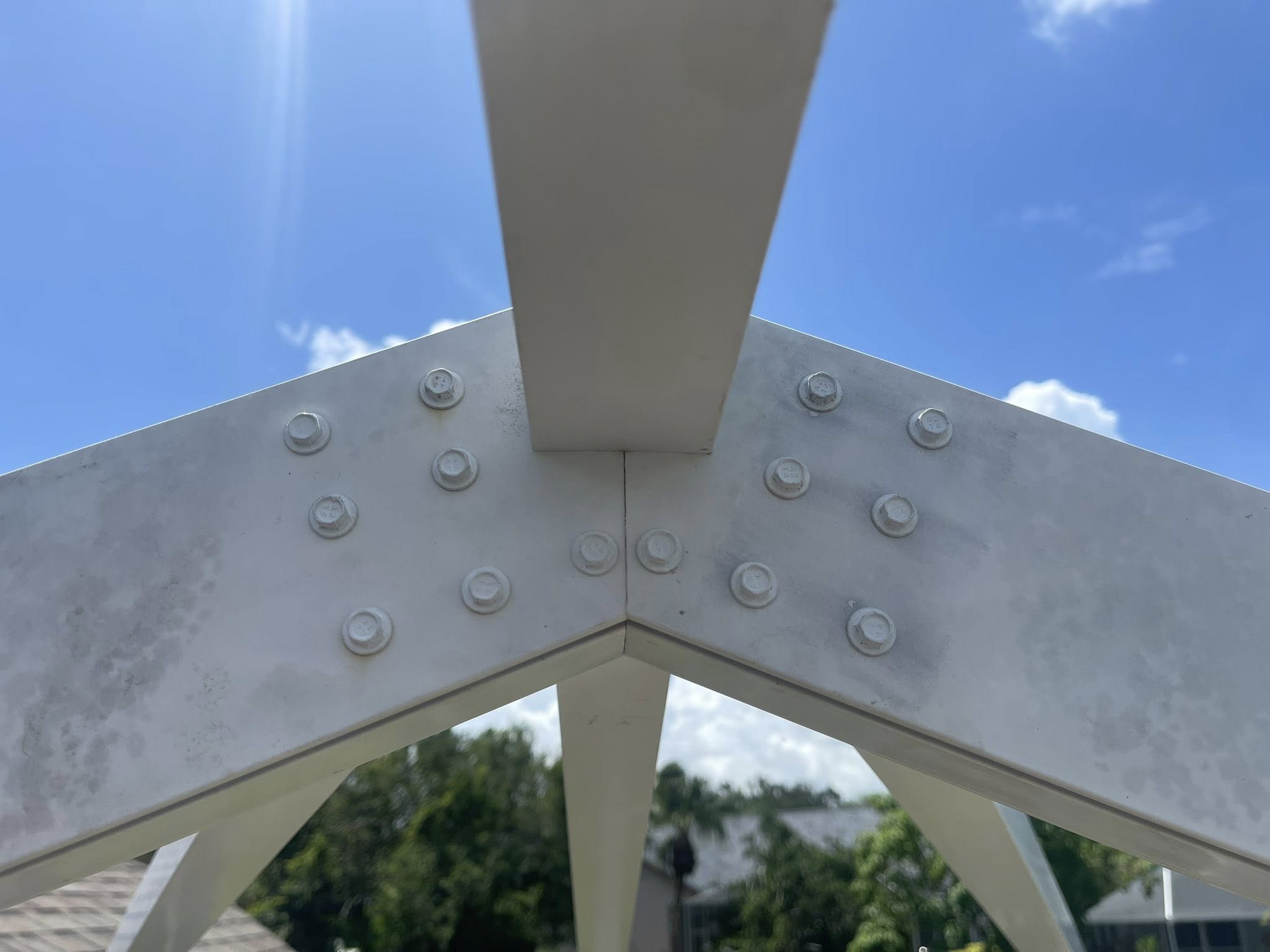
Most homeowners never inspect their screws.
Many don’t even know what type of fasteners their enclosure uses.
Yet these small pieces of metal are responsible for holding the entire structure together.
When they begin to fail, the consequences can extend far beyond a few rusty screw heads.
In some cases, fastener deterioration can affect the overall performance and stability of the enclosure itself.
The challenge is that the warning signs often go unnoticed until the problem has been developing for years.
The Most Important Parts of Your Pool Cage Are Usually the Smallest
Look at your pool enclosure.
The first things you’ll notice are:
- Screens
- Roof sections
- Vertical columns
- Structural beams
These components attract attention because they’re large and visible.
What you probably won’t notice are the hundreds—or even thousands—of fasteners connecting everything together.
Every structural member depends on connection points.
Without those connections, the enclosure simply wouldn’t function as a system.
Fasteners help:
- Hold structural members together
- Transfer wind loads
- Resist movement
- Maintain alignment
- Support overall structural integrity
In many ways, they’re the glue that holds the enclosure together.
Why Florida Is So Hard on Fasteners
Florida creates a perfect environment for deterioration.
Fasteners are exposed to:
- Rain
- Humidity
- Condensation
- Salt air
- UV exposure
- Storm activity
These conditions exist year-round.
Unlike many parts of the country, Florida never really gives outdoor structures a break.
Every day contributes a little more wear.
Over years and decades, that wear adds up.
The Rust Stain Warning Sign
One of the earliest signs of fastener deterioration is rust staining.
You may notice:
- Brown streaks
- Orange discoloration
- Stains running down aluminum members
Many homeowners assume the stains are purely cosmetic.
In reality, they’re often warning signs.
Rust stains frequently indicate that moisture has been interacting with metal components for an extended period.
The visible stain may represent only a small portion of what’s actually occurring.
Why One Bad Screw Matters
Homeowners often ask:
“Why should I worry about one screw?”
It’s a fair question.
The answer involves understanding how structural systems work.
Pool enclosures distribute loads across numerous connection points.
When one connection weakens, neighboring connections often absorb additional stress.
One bad screw rarely stays an isolated issue forever.
Over time, additional fasteners may begin experiencing greater loads.
Eventually, the problem spreads.
Think of it like removing one bolt from a ladder.
The ladder may still function.
But the stress distribution has changed.
What Is Fastener Back-Out?
One of the most overlooked issues is fastener back-out.
This occurs when screws gradually begin working their way out of the enclosure.
Homeowners may notice:
- Raised screw heads
- Loose connections
- Gaps at joints
- Minor movement
The process is often slow.
Many people never notice it until significant deterioration has occurred.
Florida’s constant cycle of heat, cooling, expansion, contraction, wind, and vibration contributes to the issue.
Why Hurricanes Expose Fastener Problems
Many fastener issues remain hidden during normal conditions.
Then a tropical storm arrives.
Or a hurricane.
Suddenly the enclosure experiences forces far greater than everyday weather.
Weak connections become apparent.
Loose screws begin moving.
Deteriorated fasteners may fail entirely.
This is one reason post-storm inspections are so important.
The storm may reveal weaknesses that have existed for years.
The Difference Between Surface Rust and Structural Concern
Not every rust stain signals a major problem.
However, determining the difference requires inspection.
Some situations involve:
- Cosmetic staining only
Other situations involve:
- Active deterioration
- Fastener failure
- Structural concerns
The challenge is that homeowners often cannot determine which category they are dealing with simply by looking from the patio.
Why Older Enclosures Need More Attention
As pool enclosures age, fastener inspections become increasingly important.
Older structures have experienced:
- More storms
- More moisture exposure
- More thermal expansion cycles
- More corrosion opportunities
That doesn’t mean older enclosures are unsafe.
It simply means inspections become more valuable.
Many older pool cages remain in excellent condition because homeowners addressed problems before they became significant.
Fastener Replacement as Preventative Maintenance
One of the smartest investments many homeowners make is addressing aging fasteners before major issues develop.
Fastener replacement may help:
- Improve structural performance
- Reduce corrosion concerns
- Improve appearance
- Extend enclosure lifespan
Like replacing worn tires before they fail, preventative maintenance often costs less than emergency repairs.
Signs You Should Schedule an Inspection
Consider a professional evaluation if you notice:
- Rust stains
- Missing screws
- Raised screw heads
- Loose connections
- Structural movement
- Aging fasteners
- Storm-related concerns
Early identification creates more options.
Waiting often creates larger repair bills.
Why This Problem Is Often Missed
Fastener deterioration isn’t dramatic.
It doesn’t make headlines.
It doesn’t usually create immediate failures.
Instead, it develops quietly.
Year after year.
Until one day homeowners begin noticing symptoms that have actually been forming for a long time.
The best time to address fastener issues is before they become obvious.
The Bottom Line
Pool enclosure fasteners may be small, but they perform one of the most important jobs in the entire structure.
Ignoring them simply because they’re difficult to see can become expensive over time.
Understanding how fasteners age, recognizing warning signs, and scheduling periodic inspections can help homeowners avoid larger repairs and extend the life of their enclosure.
Many of the most expensive pool cage repairs begin with small issues that could have been identified much earlier.
Frequently Asked Questions
How long do pool cage screws last?
It depends on environmental conditions, maintenance, storm exposure, and proximity to the coast.
Are rust stains always serious?
Not always, but they should never be ignored.
Can rusted screws be replaced?
Yes. Fastener replacement is a common part of professional pool enclosure restoration.
Should fasteners be inspected after storms?
Absolutely. Storms often expose hidden deterioration and connection issues.
Concerned About Rust Stains or Aging Fasteners?
If you’ve noticed rust streaks, loose screws, corrosion, or signs of structural wear, a professional inspection can help identify issues before they become major repairs.
Screening DunRite provides honest evaluations, restoration services, rescreening, repairs, and pool enclosure inspections throughout Port Richey, New Port Richey, Trinity, Palm Harbor, Clearwater, Spring Hill, Wesley Chapel, Odessa, and surrounding communities.
Call or Text 727-645-9575 to schedule your free estimate.
Need Pool Cage Restoration in East Lake? Call 727-645-9575 or book a free estimate online .