
The Most Overlooked Pool Cage Maintenance Item in Florida: Rusted Screws and Frayed Hurricane Tie-Down Cables
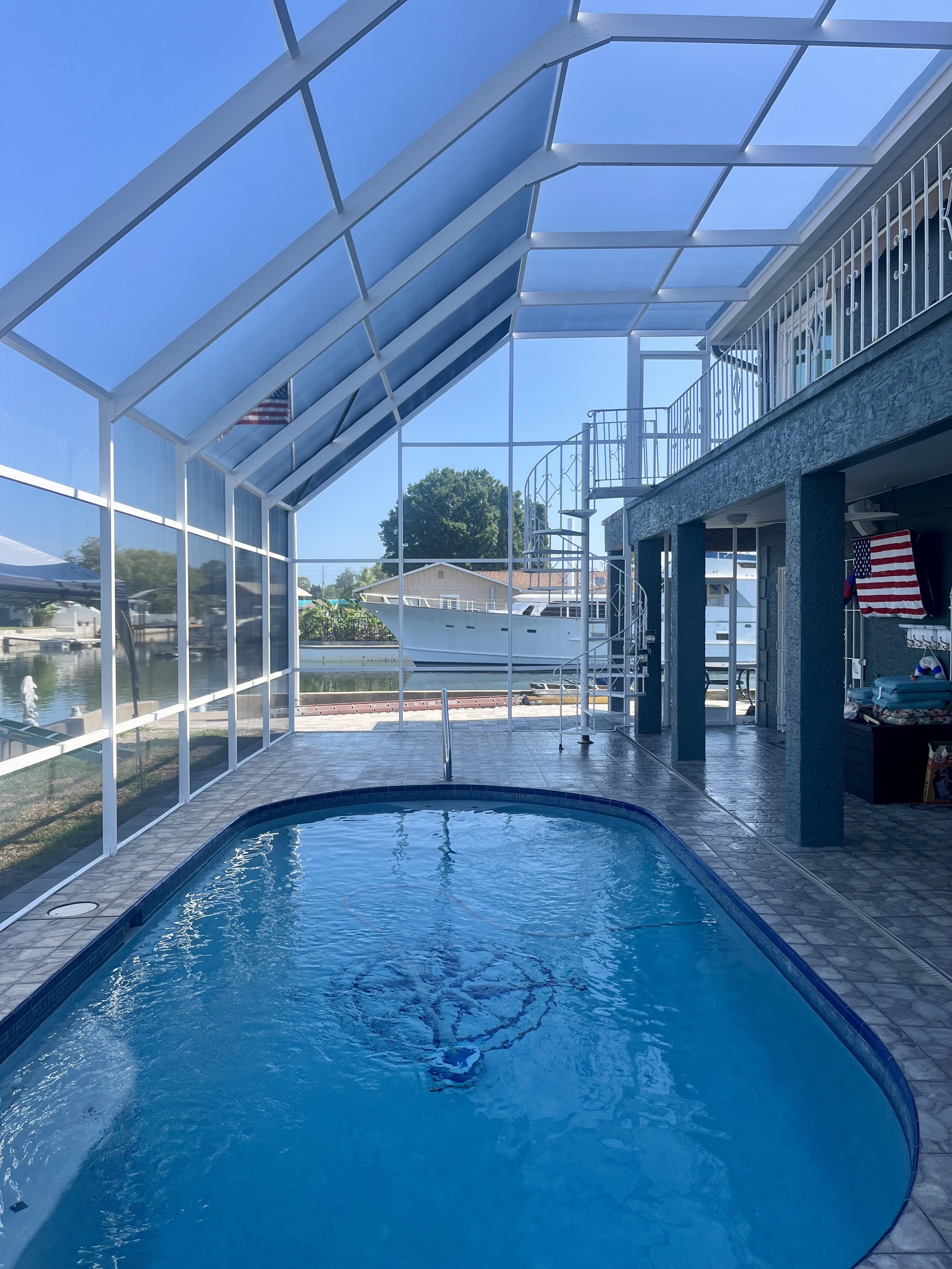
By Gian Nicolo, Owner
Most homeowners know they should replace torn screens.
Many understand the importance of repairing storm damage.
Very few realize that some of the most critical components of their pool enclosure are also some of the easiest to overlook.
Pool cage screws.
Hurricane tie-down cables.
Concrete anchors.
These components aren’t flashy.
You don’t notice them every time you walk outside.
But when strong winds arrive, they become some of the most important parts of your entire enclosure.
In fact, failing screws, deteriorated tie-down cables, and compromised anchors can allow movement throughout the structure that may eventually affect not only the pool cage itself, but also your gutters, roofline, and other connected components.
For Florida homeowners, these are not items that should be ignored.
What Are Hurricane Tie-Down Cables?
Many pool enclosures utilize hurricane tie-down systems designed to provide additional support during high wind events.
These systems typically include:
- Steel cables
- Anchor points
- Fasteners
- Concrete attachments
The purpose is simple.
Help stabilize the enclosure and resist excessive movement during severe weather.
When properly maintained, these systems play an important role in protecting the enclosure.
Like every other component exposed to Florida’s climate, however, they eventually age.
Why Tie-Down Cables Deteriorate
Tie-down cables spend years exposed to:
- Rain
- Humidity
- Salt air
- UV exposure
- Temperature fluctuations
- Storm activity
Over time, the cable strands may begin showing signs of wear.
One of the most common warning signs is fraying.
Homeowners may notice:
- Broken strands
- Visible cable damage
- Corrosion
- Rust
- Loose connections
When cable deterioration progresses, the tie-down system may no longer perform as intended during high winds.
Why Frayed Cables Should Never Be Ignored
Many homeowners look at a slightly frayed cable and assume:
“It’s still holding.”
That may be true today.
The problem is that severe weather doesn’t care about today’s conditions.
It tests the enclosure at its weakest point.
A frayed cable has already lost part of its strength.
The more strands that fail, the less capacity the cable retains.
Eventually, the tie-down system may no longer provide the support it was designed to deliver.
The Hidden Role of Tapcon Concrete Fasteners
Another component many homeowners never think about is the concrete fastener.
Pool enclosures depend on numerous anchor points.
These anchors help connect the enclosure to the structure below.
Many systems utilize concrete fasteners designed to secure important components.
When these fasteners begin deteriorating, loosening, or corroding, the enclosure becomes more vulnerable to movement.
This movement is often subtle at first.
Most homeowners don’t notice it.
But during strong storms, even small amounts of movement can create larger problems.
Why Cage Movement Creates Bigger Problems
Many people assume pool cages fail because screens tear.
That’s only part of the story.
The enclosure is an interconnected system.
When one part moves, stress transfers elsewhere.
During severe weather, excessive movement can place additional strain on:
- Structural members
- Fasteners
- Tie-down systems
- Gutters
- Roof attachment areas
This is where minor maintenance issues can become expensive repair projects.
If anchors and tie-down systems are not functioning properly, the enclosure may shift more than intended.
That movement can create stress throughout the entire system.
How Gutters Become Involved
Many homeowners are surprised to learn that enclosure movement can affect gutters.
Pool enclosures frequently connect near rooflines and gutter systems.
During storms, excessive movement may create additional forces at those connection points.
Over time, those forces can contribute to:
- Gutter damage
- Connection issues
- Structural stress
- Premature wear
The goal is to keep the enclosure secure so those forces remain properly managed.
Why Storm Season Makes This Even More Important
Florida homeowners spend considerable time preparing for hurricanes.
Unfortunately, many preparations focus only on visible issues.
The hidden components often receive little attention.
Yet these hidden components are exactly what help the enclosure perform during severe weather.
A storm may never expose a perfectly functioning tie-down system.
A deteriorated system is another story.
The best time to identify problems is before a storm arrives.
Signs You May Need Screw Replacement
Watch for:
- Rust stains
- Corroded screw heads
- Missing screws
- Loose connections
- Structural movement
These signs often indicate that the fasteners deserve closer inspection.
Replacing aging screws is frequently one of the smartest preventative maintenance investments a homeowner can make.
Signs Your Tie-Down System Needs Attention
Common warning signs include:
- Frayed cables
- Broken strands
- Rust
- Loose hardware
- Visible deterioration
- Storm-related damage
Any of these symptoms justify further evaluation.
Why Preventative Maintenance Saves Money
Homeowners often wait until something fails.
The problem with that approach is that failure usually occurs during the worst possible conditions.
A loose screw today may seem insignificant.
A frayed cable today may not appear urgent.
But when severe weather arrives, those small issues can become much more important.
Preventative maintenance is almost always less expensive than emergency repairs.
What a Professional Inspection Looks For
A thorough enclosure inspection evaluates:
- Screws
- Fasteners
- Tie-down systems
- Anchor points
- Structural members
- Corrosion
- Storm-related wear
The goal is identifying weaknesses before they become failures.
Many homeowners are surprised by what inspections uncover.
The Bottom Line
Your pool enclosure is only as strong as its connections.
Rusted screws, deteriorated concrete fasteners, and frayed hurricane tie-down cables may not attract much attention during normal weather.
During severe storms, however, they become some of the most important components in the entire structure.
Replacing aging screws and damaged tie-down cables before they fail helps reduce movement, protect structural components, and minimize the risk of damage to the enclosure, gutters, and surrounding areas.
For Florida homeowners, these small maintenance items can have a surprisingly large impact on the long-term health of a pool enclosure.
Frequently Asked Questions
How often should pool cage screws be inspected?
At least once per year and after major storms.
Are rust stains a sign screws need replacement?
Often yes. Rust staining frequently indicates fastener deterioration.
What causes hurricane tie-down cables to fray?
Years of exposure to weather, moisture, salt air, and storm stress can gradually damage cable strands.
Can a loose tie-down cable affect the enclosure?
Absolutely. Tie-down systems help stabilize the enclosure and limit excessive movement during high winds.
Concerned About Rusted Screws or Frayed Tie-Down Cables?
If you’ve noticed rust stains, deteriorating screws, frayed hurricane cables, loose anchors, or signs of enclosure movement, now is the time to have your system inspected.
Screening DunRite specializes in pool enclosure restoration, screw replacement, tie-down cable replacement, rescreening, repairs, roof cleaning, and gutter cleaning throughout Port Richey, New Port Richey, Trinity, Palm Harbor, Clearwater, Odessa, Wesley Chapel, Spring Hill, Tampa, and surrounding Florida communities.
Call or Text 727-645-9575 to schedule your free estimate and enclosure evaluation.
Need Pool Cage Restoration in Trinity? Call 727-645-9575 or book a free estimate online .