
Why Sherwin-Williams DTM Paint Is the Industry Standard for Pool Cage Restoration
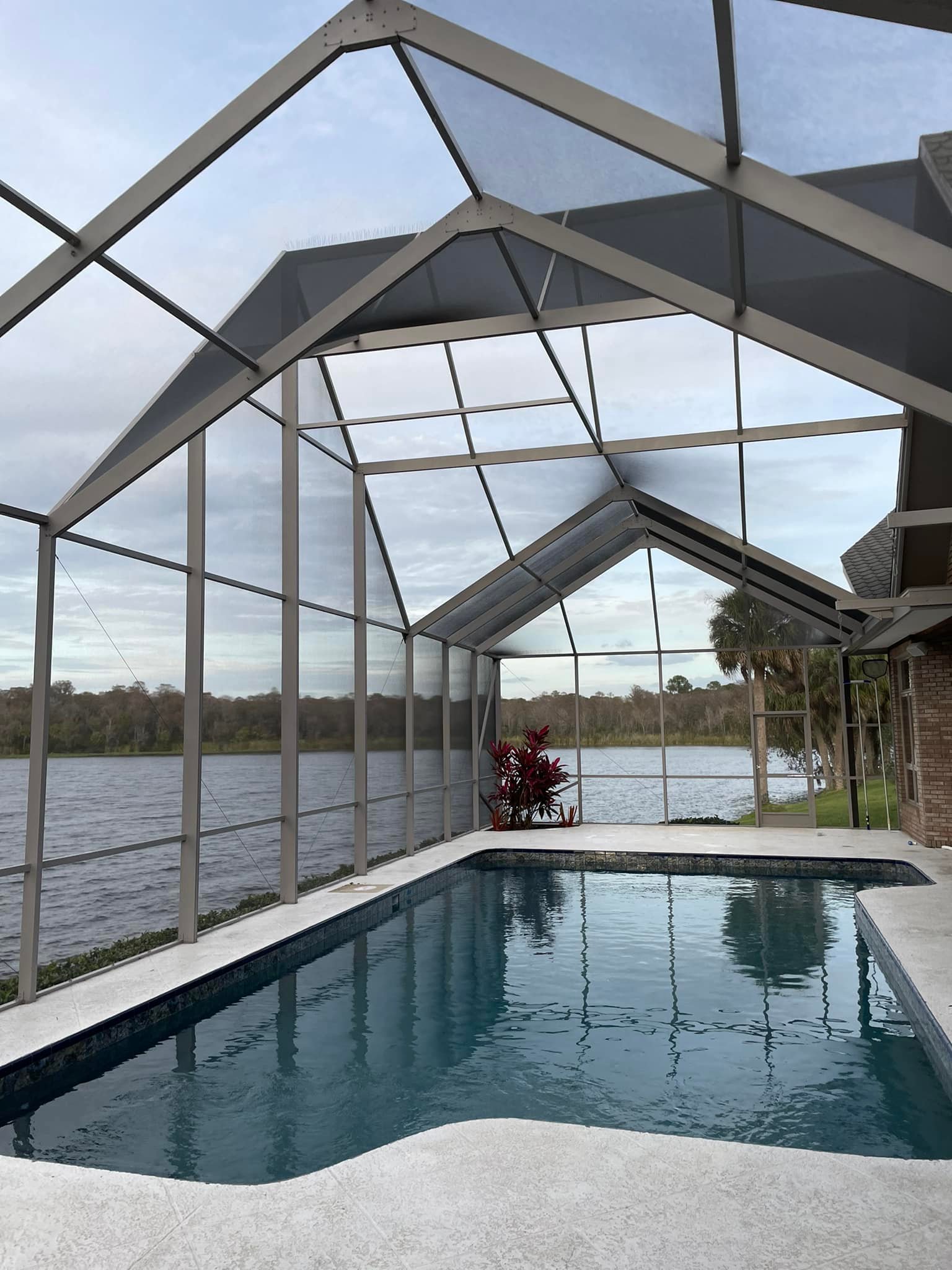
By Gian Nicolo, Owner
One of the first things homeowners notice when a pool enclosure begins showing its age is fading.
The once-rich bronze finish starts looking chalky.
The bright white enclosure begins appearing dull and weathered.
Rust stains may appear around screws.
Oxidation becomes visible.
The enclosure simply doesn’t have the clean appearance it once had.
At this point, many homeowners begin asking the same question:
“What type of paint should be used on a pool enclosure?”
The answer is one of the most important decisions in the restoration process.
At Screening DunRite, we utilize Sherwin-Williams DTM (Direct-to-Metal) coatings because they are specifically designed for metal surfaces and provide the durability Florida pool enclosures require.
What Does DTM Mean?
DTM stands for Direct-To-Metal.
Unlike ordinary paints, DTM coatings are specifically formulated to bond directly to properly prepared metal surfaces.
Pool enclosures are constantly exposed to:
- Intense UV radiation
- Humidity
- Rain
- Salt air
- Temperature fluctuations
- Storm exposure
A coating system must be capable of performing under these conditions.
DTM coatings were developed with metal structures in mind.
This makes them an excellent choice for pool cage restoration projects.
Why Pool Cage Paint Fails
Many homeowners assume fading is simply a cosmetic issue.
In reality, the paint system serves an important purpose.
It helps protect the aluminum structure from years of environmental exposure.
When coatings begin deteriorating, homeowners often notice:
- Fading
- Chalking
- Uneven appearance
- Oxidation
- Surface staining
The problem isn’t always the paint itself.
Often, years of Florida weather have simply taken their toll.
Once coatings begin breaking down, restoration becomes an increasingly attractive option.
The Two Most Popular Pool Cage Colors
While custom colors are available, two colors dominate the Florida pool enclosure industry.
Bronze
Bronze is by far the most common color used on Florida pool cages.
Homeowners love bronze because:
- It hides dirt well
- It complements most roof colors
- It creates a high-end appearance
- It reduces visual glare
- It blends naturally with landscaping
Bronze remains the most requested enclosure color throughout Florida.
Many homeowners restoring older bronze enclosures choose to remain with the same finish because of its timeless appearance.
White
White is the second most common enclosure color.
Homeowners often choose white because:
- It looks bright and clean
- It complements coastal homes
- It creates an open appearance
- It reflects heat well
White enclosures are especially popular in:
- Coastal communities
- Waterfront homes
- Traditional Florida architecture
A properly restored white enclosure can dramatically brighten an outdoor living space.
Why Surface Preparation Matters More Than Paint
One of the biggest misconceptions in the restoration industry is that paint quality alone determines the outcome.
It doesn’t.
The truth is that surface preparation often matters more than the coating itself.
Before any paint is applied, the enclosure should be properly prepared.
This may include:
- Cleaning
- Oxidation removal
- Surface preparation
- Fastener replacement
- Rust stain treatment
Without proper preparation, even the best coating system may struggle to achieve long-term performance.
The Problem With Simply Painting Over Oxidation
Some homeowners attempt quick fixes by painting directly over oxidation.
The results rarely last.
Oxidation creates a weak surface.
If coatings are applied without proper preparation, problems may include:
- Poor adhesion
- Premature failure
- Uneven appearance
- Reduced lifespan
This is why professional restoration focuses on preparation first and coatings second.
Why Restoration Often Makes More Sense Than Replacement
Many homeowners assume a faded enclosure requires replacement.
In many situations, that’s simply not true.
If the structure remains sound, restoration can often:
- Improve appearance dramatically
- Extend enclosure lifespan
- Address oxidation
- Replace deteriorated fasteners
- Improve property value
The visual transformation can be remarkable.
Many restored enclosures look years younger once the process is complete.
The Impact on Curb Appeal
Pool enclosures occupy a significant portion of a backyard’s visual space.
When the finish becomes faded and oxidized, the entire outdoor area can feel neglected.
A professionally restored enclosure often becomes one of the most noticeable improvements a homeowner can make.
The backyard immediately appears:
- Cleaner
- Newer
- Better maintained
- More inviting
This is one reason restoration remains one of the most popular upgrades among Florida homeowners.
How Long Does Pool Cage Paint Last?
Many factors influence lifespan, including:
- Sun exposure
- Salt exposure
- Maintenance
- Environmental conditions
- Surface preparation quality
No coating lasts forever.
However, choosing quality products and proper preparation significantly improves long-term performance.
Signs Your Pool Cage May Be Ready for Restoration
Watch for:
- Fading
- Chalking
- Oxidation
- Rust stains
- Uneven color
- Dull appearance
These symptoms often indicate the enclosure may benefit from restoration.
The earlier issues are addressed, the more options homeowners typically have available.
The Bottom Line
Sherwin-Williams DTM coatings remain one of the most trusted options for pool enclosure restoration because they are specifically designed for metal surfaces and Florida’s challenging environment.
Whether restoring a bronze enclosure to its rich original appearance or bringing new life to a faded white pool cage, proper preparation and quality coatings can dramatically improve both appearance and longevity.
For many homeowners, restoration provides one of the best returns on investment available for their outdoor living space.
Frequently Asked Questions
What does DTM stand for?
DTM stands for Direct-To-Metal, meaning the coating is designed specifically for properly prepared metal surfaces.
What is the most common pool cage color?
Bronze is the most common pool enclosure color throughout Florida.
Is white still popular?
Yes. White remains a popular choice, particularly for coastal and waterfront homes.
Can a faded enclosure be restored?
In many cases, yes. Professional restoration can dramatically improve appearance and extend the life of the enclosure.
Is Your Pool Cage Looking Faded or Oxidized?
If your enclosure is showing signs of fading, oxidation, rust staining, or general aging, a professional restoration may be the perfect solution.
Screening DunRite specializes in pool cage restoration, rescreening, screw replacement, aluminum restoration, and enclosure upgrades throughout Port Richey, New Port Richey, Trinity, Palm Harbor, Clearwater, Odessa, Wesley Chapel, Spring Hill, Tampa, and surrounding communities.
Call or Text 727-645-9575 for a free estimate and find out if restoration is the right option for your pool enclosure.
Need Pool Cage Restoration in Holiday? Call 727-645-9575 or book a free estimate online .