
Why No-See-Ums Are Getting Through Your Pool Enclosure (And What Most Homeowners Don't Know About Screen Mesh)
By Gian Nicolo, Owner
One of the biggest reasons homeowners install a pool enclosure is simple.
They want to enjoy their backyard without being eaten alive by bugs.
For the most part, pool enclosures do an excellent job.
Mosquitoes stay outside.
Leaves stay outside.
Most flying insects stay outside.
Then one evening you walk out to enjoy the pool and suddenly start getting bitten.
You look around.
The screens appear fine.
There are no tears.
No obvious holes.
Everything looks normal.
Yet something is definitely getting through.
If you’ve experienced this, there’s a good chance you’re dealing with one of Florida’s most annoying pests.
The no-see-um.
What Exactly Is a No-See-Um?
No-see-ums are tiny biting insects so small that many people don’t even realize they’re being attacked until they feel the bite.
They’re much smaller than mosquitoes.
In fact, many are small enough to pass through standard pool enclosure screening.
That’s why homeowners often become frustrated.
The enclosure appears intact.
Yet they’re still getting bitten.
The problem isn’t necessarily the enclosure.
It’s the screen type.
Why Standard Pool Screens Don’t Stop Everything
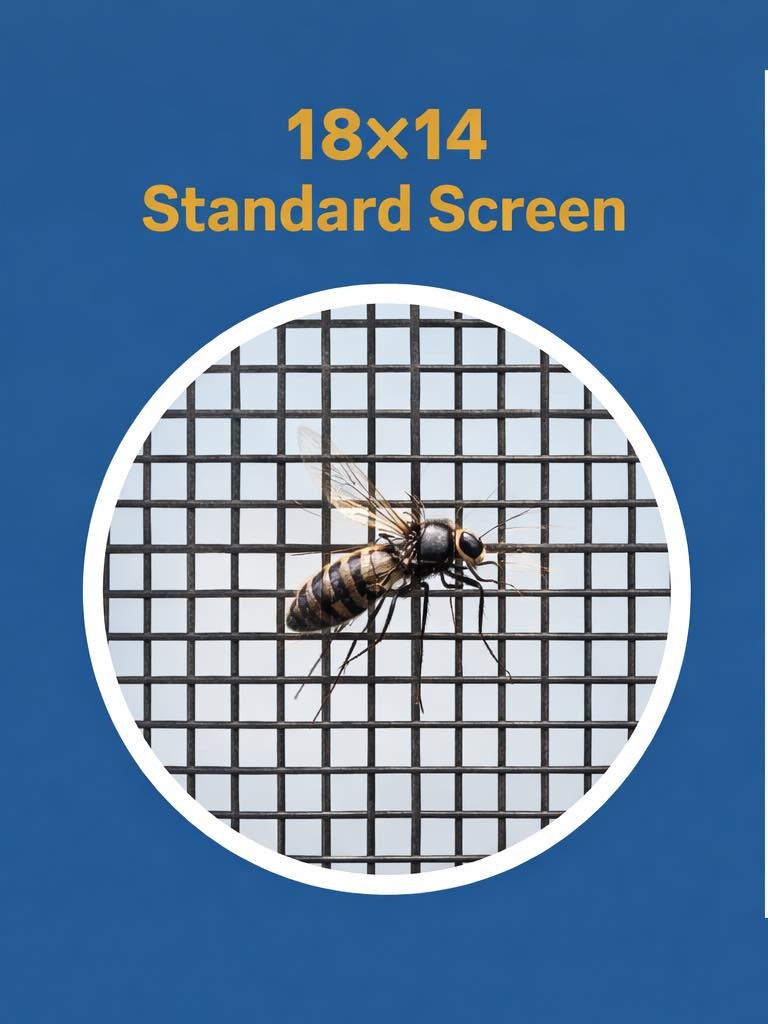
Most pool enclosures throughout Florida use standard 18×14 screen.
This screen performs very well for:
- Mosquitoes
- Flies
- Larger insects
- Debris control
However, no-see-ums are significantly smaller.
Some can pass through standard mesh openings.
This doesn’t mean the screen is defective.
It simply means the screen wasn’t designed specifically for no-see-ums.
Where No-See-Ums Are Most Common
Homeowners living near:
- Lakes
- Retention ponds
- Marshes
- Wetlands
- Coastal areas
often experience the highest no-see-um activity.
They’re especially common during:
- Early morning
- Evening
- Humid conditions
- Windless days
Many homeowners assume mosquitoes are the culprit when no-see-ums are actually responsible.
The Solution: No-See-Um Screen
Fortunately, there is a screen specifically designed for this problem.
No-see-um screen features a tighter mesh pattern than standard screening.
The smaller openings help prevent these tiny insects from entering the enclosure.
Many homeowners report a dramatic improvement after upgrading.
Especially those living near water.
The Trade-Off Most Homeowners Should Understand
Every screen type involves compromises.
With no-see-um screen, the trade-off is airflow.
Because the mesh is tighter:
- Air movement is slightly reduced
- Visibility may be slightly different
- More debris may collect on the screen surface
For many homeowners, the reduction in biting insects is well worth the trade-off.
Why Some Homeowners Only Replace Certain Sections
Not every enclosure requires a complete rescreen.
Some homeowners choose to install no-see-um screen only on:
- Lower panels
- Problem areas
- Specific sides of the enclosure
This approach can provide improved protection while controlling costs.
Other Benefits of Smaller Mesh
Many homeowners focus only on insects.
Smaller mesh openings may also help reduce:
- Fine debris
- Small seeds
- Certain airborne particles
The enclosure often feels cleaner overall.
How to Know If You Need No-See-Um Screen
Ask yourself:
- Are you getting bitten despite having screens?
- Do you live near water?
- Do bugs seem worst at sunrise or sunset?
- Are standard screens intact but not solving the problem?
If the answer is yes, no-see-ums may be responsible.
The Bottom Line
Many homeowners blame mosquitoes when no-see-ums are actually the problem.
Standard screens work well for many insects, but they aren’t designed specifically for tiny biting pests.
Upgrading to no-see-um screen can dramatically improve comfort and make your outdoor living space more enjoyable.
For homeowners who spend evenings by the pool, it may be one of the most appreciated upgrades available.
Frequently Asked Questions
Can no-see-ums get through regular pool screens?
Yes. Many no-see-ums are small enough to pass through standard screening.
Is no-see-um screen worth it?
For homeowners dealing with biting insects, many consider it one of the best upgrades available.
Will airflow decrease?
Slightly. The tighter mesh reduces airflow somewhat compared to standard screen.
Do I need to rescreen the entire enclosure?
Not always. Some homeowners upgrade only specific sections.
Still Getting Bitten Inside Your Pool Enclosure?
If insects are getting through your screens, Screening DunRite can help determine whether standard screen, no-see-um screen, pet-resistant screen, or another specialty product is right for your property.
We provide professional pool cage rescreening, restoration, repairs, roof cleaning, gutter cleaning, and enclosure upgrades throughout Port Richey, New Port Richey, Trinity, Palm Harbor, Clearwater, Odessa, Wesley Chapel, Spring Hill, Tampa, and surrounding communities.
Call or Text 727-645-9575 for a free estimate and let us help make your pool enclosure more enjoyable year-round.
Need Pool Cage Rescreening in Tampa? Call 727-645-9575 or book a free estimate online .