
The Day After the Hurricane: 12 Things Every Florida Homeowner Should Inspect Before Calling a Contractor
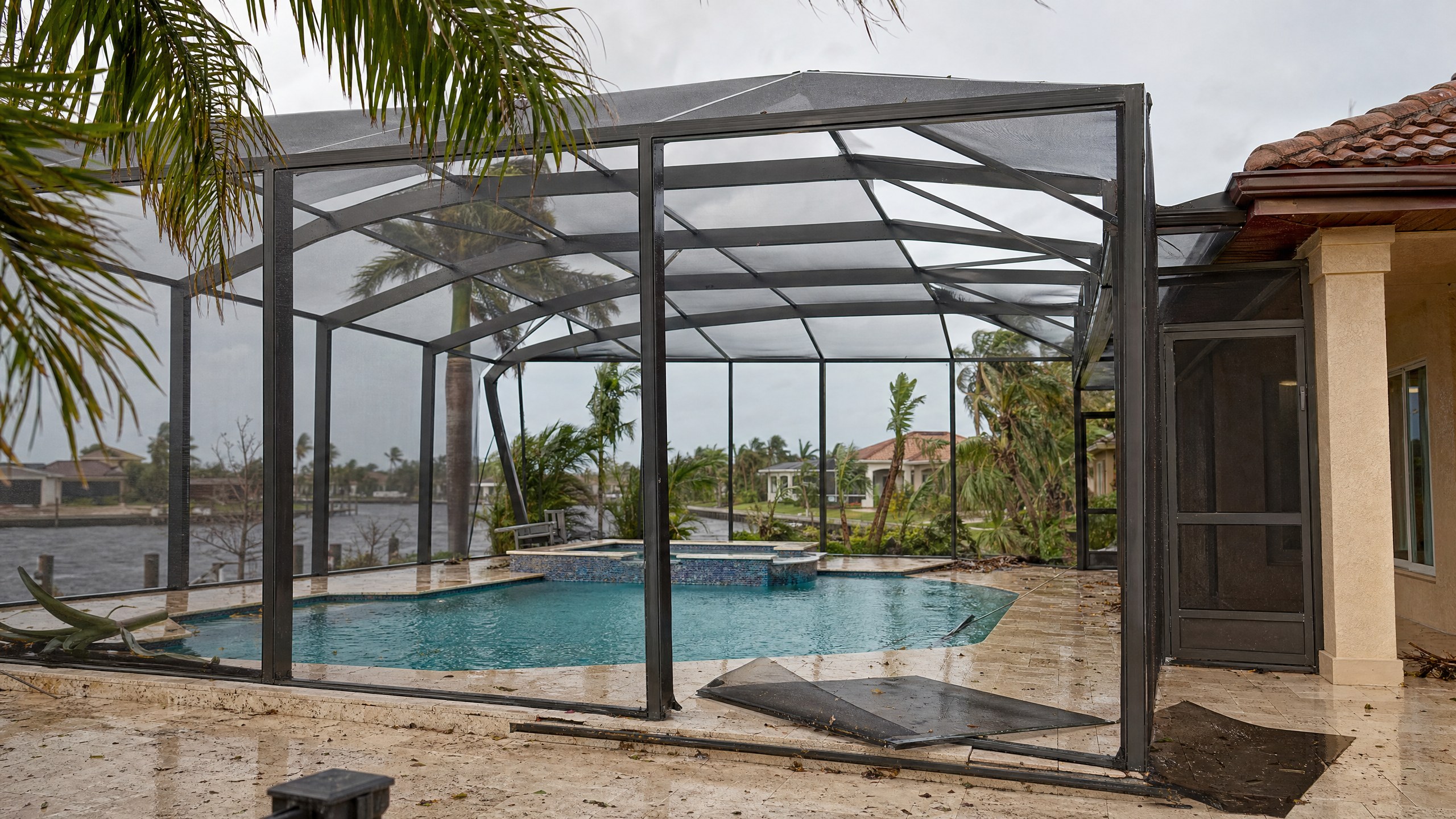
By Gian Nicolo, Owner
The hurricane has passed.
The winds have stopped.
The rain is gone.
And now you’re standing in your backyard staring at your pool cage wondering:
“Did it survive?”
Most homeowners immediately start looking for obvious damage.
A torn screen.
A bent beam.
A missing panel.
But after years of inspecting hurricane-damaged pool enclosures throughout Florida, I’ve learned something important:
The most expensive storm damage is often the damage homeowners don’t see.
In fact, some of the most serious issues don’t become visible until weeks—or even months—after the storm.
Before calling a contractor, filing an insurance claim, or assuming everything is fine, there are several important things every homeowner should inspect.
This guide explains exactly what we look for after a major storm and why each item matters.
First: Don’t Assume the Cage Is Fine Because It’s Still Standing
This is probably the biggest mistake homeowners make.
The enclosure survived.
Nothing collapsed.
Everything appears normal.
Therefore, everything must be okay.
Not necessarily.
Hurricanes place enormous stress on fasteners, structural connections, roof systems, attachment points, doors, and screens.
A pool cage can remain standing while still sustaining significant damage.
The goal is identifying that damage before it creates larger problems.
See can a pool cage be repaired after hurricane damage and why your neighbor’s cage may have fared differently.
Inspection #1: Walk the Entire Perimeter
Start by walking around the enclosure slowly.
Look for:
- Bent members
- Visible movement
- New gaps
- Twisted components
- Misaligned sections
Do not rush.
Many important clues are subtle.
What you’re looking for is anything that appears different than it did before the storm.
Inspection #2: Look for New Rust Stains
Rust stains often appear after storm exposure.
Look closely at beam connections, post connections, roof attachments, and door frames.
New staining may indicate connection stress or fastener deterioration.
The stain itself is rarely the concern.
The source of the stain is what matters.
See the pool cage screw crisis.
Inspection #3: Check Every Door
Pool cage doors often reveal storm-related movement.
Open and close every door.
Ask:
- Does it drag?
- Does it latch properly?
- Has alignment changed?
- Does it require extra force?
Many structural issues reveal themselves through door performance.
See why your pool cage door may be telling you something.
Inspection #4: Inspect Every Screen Panel
Don’t just look for missing screens.
Look for loose spline, stretching, distortion, small tears, and stress points.
Wind loading can damage screen systems even when panels remain intact.
Small tears often become large tears later.
See pool cage rescreening after a hurricane.
Inspection #5: Examine Roof Components
If your enclosure includes roof panels, inspect for cracks, loose fasteners, impact damage, water intrusion, and movement.
Roof systems often absorb significant storm stress.
Even minor damage deserves evaluation.
Inspection #6: Look for Structural Deflection
Stand back and examine the enclosure from multiple angles.
Look for sagging areas, leaning members, uneven roof lines, and distorted geometry.
Pool cages should maintain their intended shape.
Visible changes may indicate structural concerns.
See 10 structural warning signs.
Inspection #7: Check Attachment Points
Pay close attention where the enclosure connects to concrete, foundations, home structures, and existing slabs.
Storm forces concentrate heavily at attachment points.
These areas deserve careful inspection.
Inspection #8: Search for Impact Damage
Flying debris causes enormous damage during hurricanes.
Look for dents, scratches, impact marks, damaged members, and roof strikes.
Impact damage often reveals itself after cleanup is complete.
Inspection #9: Look for Loose Components
Gently inspect for loose braces, loose trim, loose doors, and loose connections.
Nothing should feel unstable.
Movement deserves investigation.
Inspection #10: Photograph Everything
This step is often overlooked.
Take photographs of the entire enclosure, damaged areas, roof systems, screens, and structural components.
Documenting condition immediately after the storm can be extremely valuable later — especially for insurance claims.
Inspection #11: Compare Current Condition to Pre-Storm Photos
If you have older photographs, compare them.
Many homeowners notice new movement, new damage, or new alignment issues that they would have otherwise missed.
Pictures are powerful inspection tools.
Inspection #12: Schedule a Professional Evaluation for Older Enclosures
This is especially important if your pool cage is more than 10 years old, located near the coast, showing signs of corrosion, or previously damaged by storms.
Older enclosures are more likely to experience hidden storm-related concerns.
See hidden problems we find during most inspections.
The Most Common Post-Hurricane Mistake
Doing nothing.
Many homeowners wait until screens begin failing, doors stop working, corrosion appears, or structural movement worsens.
By then, what was once a small issue may require much larger repairs.
The sooner concerns are identified, the more options typically exist.
The Most Valuable Thing a Hurricane Reveals
A hurricane is essentially a stress test.
It tests fasteners, connections, structural integrity, and maintenance history.
Weaknesses that remained hidden for years often become visible afterward.
Final Thoughts
The day after a hurricane is one of the most important inspection opportunities a Florida homeowner will ever have.
The smartest homeowners don’t simply ask: “Did my pool cage survive?”
They ask: “How did my pool cage perform?”
Those are very different questions.
Call 727-645-9575 or book online.
Need Pool Cage Repair in Largo? Call 727-645-9575 or book a free estimate online .