
Can My Pool Cage Be Restored or Do I Need a New One? The Florida Homeowner's Guide to Making the Right Decision
By Gian Nicolo, Owner
This is probably the most important question a Florida homeowner can ask before spending money on their pool enclosure.
And unfortunately, it’s also one of the most misunderstood.
Every week I meet homeowners who are convinced they need a brand-new pool cage.
Sometimes they’re right.
Most of the time, they’re not.
The problem is that homeowners often make this decision based on appearance.
And appearance can be incredibly misleading.
A pool cage can look terrible and still be an excellent candidate for restoration.
It can also look relatively good while hiding serious structural concerns.
That’s why deciding between restoration and replacement should never begin with how the enclosure looks.
It should begin with understanding its condition.
Why Most Homeowners Assume They Need a New Pool Cage
Let’s be honest.
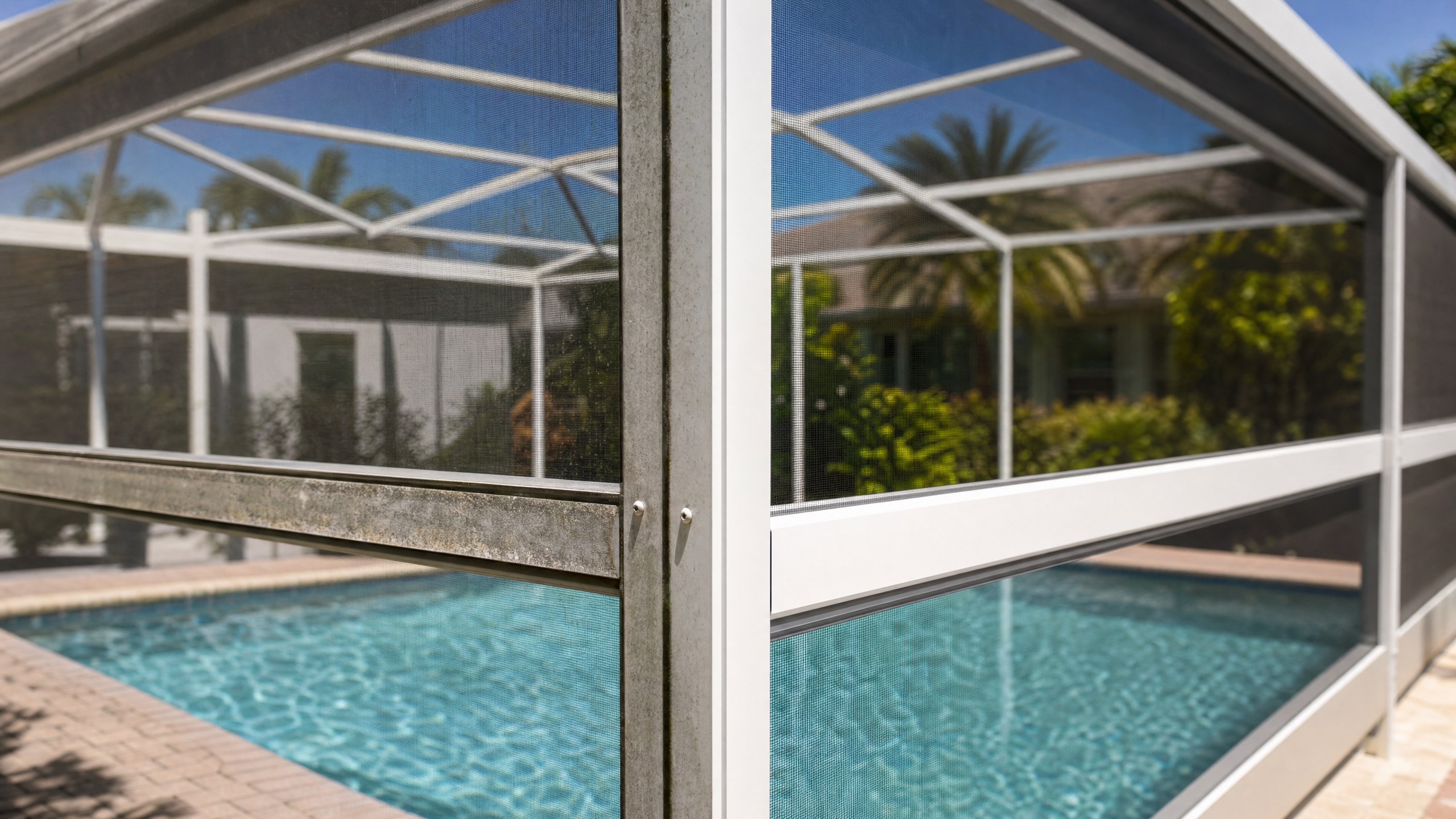
Pool cages can look rough after years of Florida weather.
You may notice:
- White chalky oxidation
- Faded aluminum
- Torn screens
- Rust stains
- Corroded screws
- Sagging doors
- Storm damage
At some point many homeowners start thinking:
“This thing is finished.”
And that’s understandable.
The enclosure doesn’t look like it did when it was new.
The problem is that appearance doesn’t tell the whole story.
Not even close.
Read why Florida homeowners replace their pool cage too soon.
The First Question I Ask
Whenever someone asks whether they need a new enclosure, I immediately ask:
“What specifically is wrong with the existing one?”
The answer is important.
Because different problems require different solutions.
For example:
Torn Screens
Rarely justify replacement.
Oxidation
Almost never justifies replacement.
Faded Appearance
Usually a restoration issue.
Rust Stains
Need investigation but do not automatically require replacement.
Door Problems
Often repairable.
Corroded Fasteners
May require attention but do not automatically mean the enclosure is finished.
The problem homeowners see isn’t always the problem that matters most.
See pool cage door warning signs and the fastener problem most Florida pool cage owners don’t know about.
What Actually Determines Whether a Pool Cage Can Be Restored
This is where the conversation changes.
Because restoration isn’t about appearance.
It’s about structure.
The real questions are:
Is the framework healthy?
Are the structural members sound?
Are the connections performing properly?
Is corrosion manageable?
Does the enclosure have good restoration potential?
If the answer is yes, restoration may provide tremendous value.
Read the single most important question before restoring a pool cage.
The Biggest Pool Cage Myth in Florida
The biggest myth is:
Old equals replacement.
It doesn’t.
I’ve inspected:
- 20-year-old cages worth restoring
- 25-year-old cages worth restoring
- Older cages with years of life remaining
I’ve also inspected younger enclosures that required major structural conversations.
Age is not the deciding factor.
Condition is.
Always.
See the most dangerous pool cage in Florida isn’t the oldest one.
Signs Your Pool Cage Is a Strong Restoration Candidate
There are several indicators.
The Structure Is Still Straight
Healthy geometry is a great sign.
Most Issues Are Cosmetic
Examples include:
- Oxidation
- Fading
- Aging screen
- Appearance concerns
Fastener Issues Are Manageable
Many enclosures can be significantly improved through proper fastener replacement programs.
The Homeowner Likes the Existing Design
If you like the enclosure itself, restoration often becomes very attractive.
Read the pool cage inspection that saved a homeowner $38,000.
Signs Replacement May Deserve Consideration
Let’s be clear.
Some enclosures do reach a point where replacement becomes the better investment.
Potential examples include:
Significant Structural Deterioration
Extensive Corrosion
Major Hurricane Damage
Major Design Changes
End-of-Life Structural Components
The key is understanding whether those conditions actually exist.
Not assuming they exist.
Why Restoration Is Often the Better Financial Decision
Many homeowners are surprised when they learn what restoration can accomplish.
A comprehensive restoration may include:
- Pool cage painting
- Rescreening
- Fastener replacement
- Structural repairs
- Door repairs
- Oxidation removal
The result can be dramatic.
The enclosure looks newer.
Performs better.
And often costs significantly less than replacement.
Read how much pool cage restoration costs in Florida and full rescreening vs panel replacement.
The Most Expensive Mistake Homeowners Make
Deciding before inspecting.
This happens constantly.
A homeowner decides:
“I need a new cage.”
Before anyone evaluates the structure.
The better process is:
Inspect.
Evaluate.
Understand.
Then decide.
Because the smartest solution depends on facts.
Not assumptions.
See repair, restore, or replace your pool cage.
Why Some Contractors Recommend Replacement Quickly
Replacement is a larger project.
That doesn’t automatically make the recommendation wrong.
But homeowners should always ask:
Why?
What specifically makes replacement necessary?
What structural concerns exist?
What prevents restoration?
A qualified professional should be able to explain the reasoning clearly.
Read why the cheapest pool cage estimate is usually the most expensive one.
What We Look For During Evaluations
When determining whether restoration makes sense, we focus on:
Structural Integrity
Fastener Condition
Corrosion Levels
Door Performance
Hurricane History
Previous Repairs
Overall Restoration Potential
Only after understanding those factors can a recommendation be made responsibly.
Read the Florida pool cage inspection report: what homeowners are most surprised to learn and what I see that homeowners don’t during a pool cage inspection.
The Question Every Homeowner Should Ask
Before approving a replacement project, ask:
“What specifically prevents this enclosure from being restored?”
That’s the question.
Because the answer often reveals whether replacement is truly necessary.
Or simply assumed.
Read the question Florida homeowners never ask about their pool cage.
Final Thoughts
Many Florida homeowners replace pool cages that could have been restored successfully.
Others restore enclosures that should have been replaced.
The difference between those two outcomes is usually information.
The smartest decision isn’t repair.
The smartest decision isn’t restoration.
The smartest decision isn’t replacement.
The smartest decision is understanding the actual condition of the enclosure first.
Because once the facts are known, the right path usually becomes obvious.
And that’s how homeowners make decisions they still feel good about years later.
Before hiring anyone, use 25 questions every homeowner should ask a pool cage contractor.
Call 727-645-9575 or book online.
Need Pool Cage Restoration in East Lake? Call 727-645-9575 or book a free estimate online .