
What I See That Homeowners Don't: A Day in the Life of a Florida Pool Cage Inspector
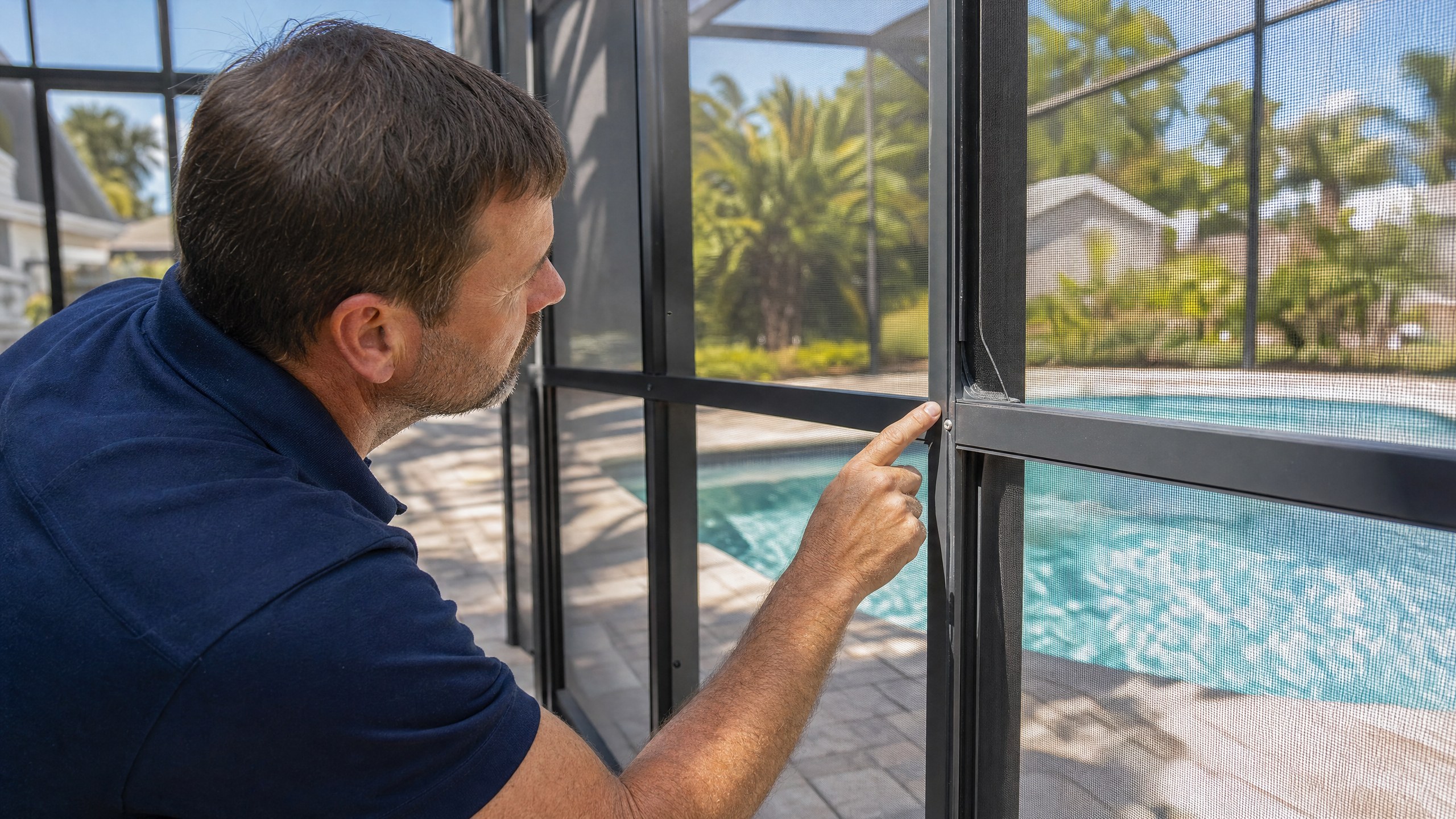
By Gian Nicolo, Owner
One of the most interesting parts of my job is that I often see things homeowners never notice.
Not because they’re careless.
Not because they’re uninformed.
But because they’re looking at their pool cage as homeowners.
I’m looking at it as an inspector.
And those are two very different perspectives.
A homeowner walks outside and sees:
- A pool
- A lanai
- Some screens
- An aluminum structure
I walk outside and immediately begin evaluating:
- Structural movement
- Fastener condition
- Corrosion patterns
- Hurricane exposure
- Repair history
- Future risks
The funny thing is that we’re both looking at the exact same enclosure.
We’re just seeing completely different things.
This article is a behind-the-scenes look at what actually goes through my mind during a typical pool cage inspection.
The Inspection Starts Before I Leave the Truck
Most homeowners think the inspection begins when I walk into the backyard.
It doesn’t.
It starts the moment I arrive at the property.
Before I even step out of the truck, I’m already evaluating:
- Distance from the coast
- Wind exposure
- Tree coverage
- Property orientation
- Neighborhood age
- Nearby water sources
These factors tell me a lot about what I may find.
A waterfront property and an inland property often age very differently.
Understanding the environment helps me understand the enclosure.
See why some Florida pool cages age faster than others.
The First Thing I Usually Look At
Most homeowners assume I look at screens first.
I don’t.
I usually look at the structure.
Specifically:
- Roof lines
- Alignment
- Geometry
- Symmetry
Why?
Because the enclosure’s shape tells a story.
Healthy structures tend to look balanced.
When I see unusual lines, movement, sagging, or distortion, my attention immediately shifts.
The structure often reveals concerns long before the homeowner notices them.
The Rust Stain Test
This is one of the first clues I look for.
Rust stains are like fingerprints.
They leave evidence.
A homeowner sees:
“A brown stain.”
I see:
“A connection point that deserves investigation.”
The stain itself is rarely important.
The source is.
Some of the most significant issues I’ve discovered began with a rust stain that looked completely harmless.
Read the Florida pool cage inspection report: what homeowners are most surprised to learn.
The Door Tells Me More Than Most Homeowners Realize
I love pool cage doors.
Not because I enjoy repairing them.
Because they tell the truth.
Doors are incredibly sensitive.
Small structural changes often affect doors before they affect anything else.
When a homeowner says:
“The door has been sticking lately.”
My brain immediately starts asking questions.
Why?
What changed?
What caused it?
The door is often reporting something larger happening elsewhere in the enclosure.
See pool cage door warning signs.
I Pay Attention to What the Homeowner Says
This surprises people.
But one of the most valuable parts of an inspection is often the conversation.
A homeowner might casually mention:
- A storm a few years ago
- A repair that was performed
- A door issue
- A recurring screen problem
Those details matter.
A lot.
Often the homeowner doesn’t realize how important the information is.
But those small comments frequently help explain what I’m seeing.
The Story Hidden in the Screens
Most people think torn screens are simply torn screens.
Sometimes they are.
Sometimes they aren’t.
Patterns matter.
For example:
One torn panel may be random.
Twenty torn panels tell a story.
Repeated failures often indicate something larger.
Possibilities include:
- Aging materials
- Structural movement
- Installation issues
- Environmental stress
The pattern is usually more important than the tear itself.
Read full rescreening vs panel replacement.
What Makes Me Concerned
There are certain things that immediately increase my attention.
Examples include:
Multiple Rust Stains
Structural Movement
Significant Door Alignment Changes
Corrosion Near Connections
Previous Repairs That Look Questionable
None of these automatically indicate major problems.
But they deserve investigation.
And that’s what inspections are all about.
See pool cage clues in the first 60 seconds.
What Homeowners Almost Never Notice
If I had to choose one thing homeowners miss most often, it would be:
Connection systems.
Fasteners.
The hidden components that hold the structure together.
Why?
Because they’re not visible.
The homeowner sees the enclosure.
The inspector sees the connections.
And the connections often determine the future of the enclosure.
Read the fastener problem most Florida pool cage owners don’t know about and the hidden problems found on most pool cage inspections.
The Most Common Misunderstanding
Homeowners often believe that appearance tells the whole story.
It doesn’t.
I’ve inspected:
- Beautiful enclosures with serious concerns
- Ugly enclosures with excellent structural health
Appearance and condition are not the same thing.
This is one of the biggest lessons inspections teach.
Read what most contractors miss during an inspection.
What Makes an Inspection Valuable
The value isn’t finding problems.
The value is understanding reality.
The actual condition of the enclosure.
Not the appearance.
Not assumptions.
Reality.
Once homeowners understand reality, they can make informed decisions.
And informed decisions are almost always better than expensive surprises.
See the single most important question before restoring a pool cage.
What I Wish Every Homeowner Understood
If I could teach every Florida homeowner one thing, it would be this:
Your pool cage is a structural system.
Not just a screen structure.
Everything works together:
- Screens
- Fasteners
- Connections
- Doors
- Structural members
The health of the enclosure depends on all of them.
The sooner concerns are identified, the easier they usually are to address.
Read why Florida pool cages don’t fail all at once.
Final Thoughts
Every pool cage tells a story.
The environment tells part of it.
The homeowner tells part of it.
The structure tells part of it.
The inspection simply puts the pieces together.
Most homeowners only see what is visible.
That’s normal.
My job is to see what isn’t.
Because the future of the enclosure is often determined by the things homeowners never notice.
And that’s exactly why inspections matter.
Run a 5-minute pool cage inspection between professional evaluations. Before hiring anyone, use 25 questions every homeowner should ask a pool cage contractor.
Call 727-645-9575 or book online.
Need Pool Cage Repair in Trinity? Call 727-645-9575 or book a free estimate online .