
Pool Cages in Florida: The Complete Homeowner's Guide to Inspection, Maintenance, Restoration, Rescreening, and Hurricane Protection
By Gian Nicolo, Owner
If you own a home in Florida, your pool enclosure is likely one of the largest and most valuable structures on your property.
Yet surprisingly few homeowners truly understand how pool cages work, how they deteriorate, how to maintain them properly, or how to maximize their lifespan.
As someone who has spent years evaluating, repairing, restoring, and rescreening pool enclosures throughout Florida, I can tell you that most expensive pool cage problems begin as small issues that homeowners never see.
The good news is that most of these problems are preventable.
This guide will teach you everything you need to know about owning, maintaining, protecting, and restoring a pool enclosure in Florida.
Whether your cage is brand new or twenty years old, understanding these principles can save you thousands of dollars over the life of the structure.
Why Pool Cages Are So Popular in Florida
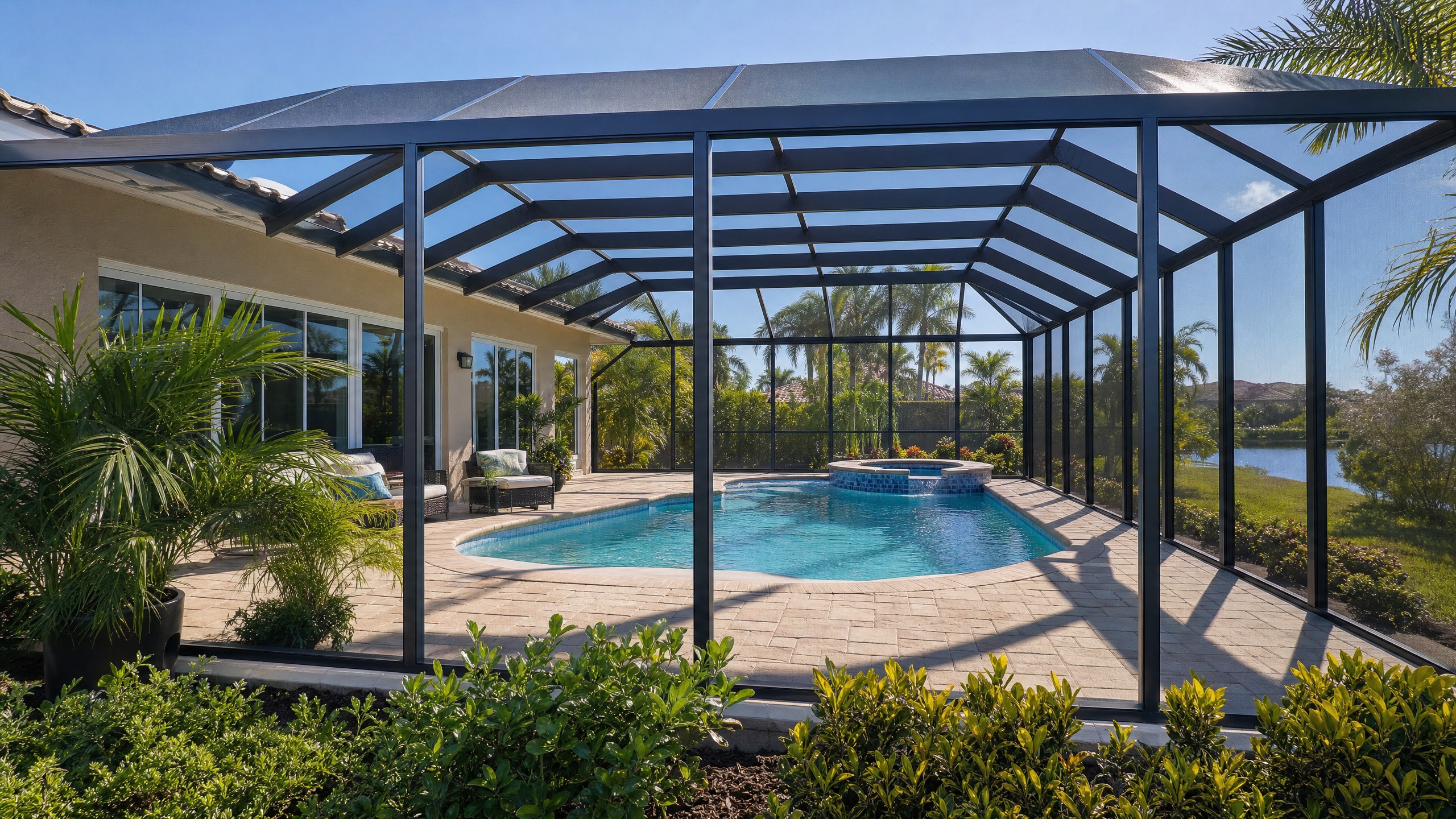
Pool enclosures are one of the most recognizable features of Florida homes.
They provide:
- Insect protection
- Improved outdoor comfort
- Reduced pool maintenance
- Increased safety
- Enhanced property value
- Better year-round usability
Without an enclosure, Florida homeowners often spend significantly more time cleaning their pools and dealing with insects.
A properly maintained pool cage becomes an extension of the home’s living space.
It creates an outdoor room that can be enjoyed throughout the year.
Understanding the Anatomy of a Pool Cage
Most homeowners only notice the screen.
Professionals evaluate the entire system.
A typical pool enclosure includes:
Structural Aluminum Framework
This forms the skeleton of the enclosure.
It includes:
- Posts
- Beams
- Braces
- Roof framing
- Attachment systems
Screen System
The screen serves as the protective barrier that keeps insects and debris outside.
Fasteners
Often the most overlooked component.
Fasteners connect structural members and hold the enclosure together.
Doors
Doors experience more wear than most other parts of the enclosure.
See why your pool cage door may be telling you something for early warning signs.
Roof Components
Many enclosures include:
- Screen roofs
- Polycarbonate panels
- Specialty roof systems
Every component must work together for the enclosure to perform properly.
The Biggest Threats to Florida Pool Enclosures
Florida is one of the most aggressive environments in America for exterior aluminum structures.
Every day your enclosure is exposed to:
Ultraviolet Radiation
Constant sun exposure gradually breaks down materials.
Humidity
Moisture contributes to corrosion and deterioration.
Salt Air
Particularly damaging in coastal communities.
Learn more in why Florida salt air destroys pool cages miles from the water.
Wind Exposure
Even ordinary wind creates ongoing stress.
Tropical Storms and Hurricanes
Severe weather can accelerate aging and expose hidden weaknesses.
Environmental Contaminants
Pollution, organic growth, and airborne debris all affect long-term performance.
The deterioration process never stops.
Maintenance is the key to slowing it down.
The Importance of Annual Inspections
Most major repairs begin as small problems.
Annual inspections can identify:
- Fastener deterioration
- Structural movement
- Corrosion
- Screen failure
- Door issues
- Roof damage
The earlier these issues are identified, the less expensive they are typically to correct.
Professional inspections often save homeowners thousands of dollars.
Start with a 5-minute pool cage inspection you can do yourself, then compare what you find to the hidden problems professionals discover on most inspections.
Why Fasteners Matter More Than Most Homeowners Realize
If there is one thing I wish every homeowner understood, it is this:
The screws holding your enclosure together are critically important.
Many pool cages contain hundreds or thousands of fasteners.
These fasteners experience:
- Moisture
- Salt exposure
- Heat
- Expansion and contraction cycles
Over time, corrosion can develop.
The enclosure may appear fine while hidden deterioration is occurring throughout the structure.
This is why rust stains should never be ignored.
They often indicate much larger issues beneath the surface.
Read the Florida pool cage industry’s fastener problem and why pool cage screws rust in Florida for a deeper look.
Understanding Pool Cage Oxidation
One of the most common reasons homeowners call us is because their enclosure looks faded and chalky.
This is usually caused by oxidation.
Signs include:
- White powdery residue
- Faded appearance
- Uneven color
- Dull aluminum
Oxidation is common throughout Florida and tends to worsen with age.
The good news is that professional restoration can often dramatically improve appearance.
See pool cage oxidation: what Florida homeowners should know.
How Long Does Pool Cage Screen Last?
Screen lifespan depends on:
- Material type
- Sun exposure
- Storm activity
- Maintenance
- Environmental conditions
Most screen materials provide many years of service.
Eventually, however, all screen will require replacement.
Common signs include:
- Tears
- Brittleness
- Increased insects
- Loose panels
- Aging appearance
Ignoring a small tear can cost far more than you expect — see the real cost of ignoring a small pool screen tear.
Choosing the Right Screen Material
Not all screen products are the same.
Popular options include:
Standard Fiberglass Screen
The most common choice.
Provides excellent visibility and value.
No-See-Um Screen
Designed to block tiny insects.
Popular near lakes, ponds, and wetlands.
Compare mesh sizes in 18x14 vs 20x20 no-see-um screen for Florida enclosures.
Pet Screen
A stronger material designed for homes with pets.
Read is pet screen worth it for a Florida pool enclosure before upgrading.
Selecting the right screen can significantly improve your outdoor experience.
Repair, Rescreen, Restore, or Replace?
This is one of the most important decisions homeowners face.
Repair
Best for isolated issues.
Examples:
- Single torn panel
- Minor door repairs
- Limited damage
Rescreen
Ideal when screen material is aging or multiple panels have failed.
See how much pool cage rescreening costs in Florida for budgeting context.
Restoration
Appropriate when:
- Structure remains sound
- Appearance has deteriorated
- Fasteners require attention
- Oxidation is present
Replacement
May be necessary when:
- Structural damage is extensive
- Corrosion is severe
- Major redesign is desired
A professional inspection helps determine the best path forward.
For decision guidance, read when pool enclosure restoration makes sense in Florida.
Hurricane Protection and Pool Cages
Many homeowners assume hurricanes are the leading cause of pool cage failure.
In reality, most storm failures involve pre-existing weaknesses.
Common issues include:
- Rusted fasteners
- Structural movement
- Deferred maintenance
- Previous damage
Preparing before hurricane season is critical.
Recommended steps include:
- Annual inspections
- Fastener evaluation
- Tree trimming
- Screen repairs
- Structural assessments
Preventative maintenance often improves storm performance.
See why your neighbor’s pool cage survived the hurricane, how to protect your pool enclosure during storm season, and what to inspect the day after a hurricane.
How Pool Cage Restoration Works
A professional restoration project may include:
Inspection
The enclosure is evaluated from top to bottom.
Cleaning
Years of contamination are removed.
Oxidation Treatment
Surfaces are prepared properly.
Fastener Replacement
Deteriorated hardware is addressed.
Compare stainless steel vs mixed-alloy pool cage screws when fasteners are part of the scope.
Screen Repairs
Damaged areas are corrected.
Professional Coatings
Protective finishes improve both appearance and durability.
Learn about coating systems in Sherwin-Williams DTM pool cage restoration.
The goal is not simply making the enclosure look better.
The goal is extending its useful life.
The Most Expensive Mistake Homeowners Make
Waiting too long.
Most major restoration projects started as minor maintenance issues.
Examples include:
- Small rust stains
- Loose fasteners
- Minor screen damage
- Door alignment issues
When addressed early, these problems are usually manageable.
When ignored, they often become expensive.
What We Recommend
If your enclosure is:
- More than 10 years old
- Showing signs of oxidation
- Experiencing repeated screen failures
- Located near the coast
- Showing rust stains
- Exposed to recent storm activity
schedule an inspection.
The best time to address problems is before they become obvious.
Before hiring anyone, use 25 questions every homeowner should ask a pool cage contractor.
Final Thoughts
Your pool enclosure is more than a screen structure.
It is an investment.
It protects your outdoor living space.
It contributes to your property’s value.
And when properly maintained, it can provide years of enjoyment for your family.
The homeowners who spend the least over time are usually the ones who inspect, maintain, and protect their enclosures before major problems develop.
Understanding how your pool cage works is the first step.
Maintaining it properly is the second.
The combination of those two things can dramatically extend the life of your enclosure and protect your investment for years to come.
Call 727-645-9575 or book online.
Need Pool Cage Repair in Palm Harbor? Call 727-645-9575 or book a free estimate online .